• Blog
  • Amazon Shop
  • Pyr Apparel & Gifts
  • Nav Social Menu

    • Email
    • Facebook
    • Instagram
    • LinkedIn
    • Pinterest

It's Dog or Nothing

All Things Great Pyrenees

  • Blogwhat’s happening
  • Aboutwho we are
  • Breed Infoall things pyrenees
  • Mediapartner with the pyrs
    • Awards & Recognition
  • Contactlet’s chat
    • Updates & Exclusive Deals
    • Disclosure
  • Skip to secondary menu
  • Skip to main content
  • Skip to primary sidebar
  • Skip to footer

Archives for February 2016

Stop Asking If Your Great Pyrenees is Overweight Online

February 29, 2016 5 Comments

I know you mean well when asking if your Great Pyrenees is overweight online, but it's really worthless. Click through to see why.

Stop Asking If Your Great Pyrenees Is Overweight Online

If there’s one thing that drives me absolutely bonkers (okay, there are a lot of things that do that, but we’ll just focus on this for now) it’s people asking advice about their dog’s weight online after receiving veterinary guidance.

I see it all. the. time.

“Just had *insert dog’s name* at the vet and the vet says he needs to lose 20 pounds! Can you believe it?! Do you think he looks like he needs to lose weight?”

This is often answered with, “He looks great! He’s just thick.” or “He just has a lot of fluff!”

A Great Pyrenees is not thick. However, a Great Pyrenees does fill out. Just not in a way most people think.

Filling out does not mean that your dog puts extra fat on his body. It means that his ribs widen and chest deepens. This is usually accompanied by muscle growth. A Great Pyrenees will not have muscle substance similar to a dog such as a Rottweiler. They still need to be exceptionally agile for defending their flock.

The Great Pyrenees Breed Standard states:

The Great Pyrenees is a dog of medium substance whose coat deceives those who do not feel the bone and muscle. Commensurate with his size and impression of elegance there is sufficient bone and muscle to provide a balance with the frame.

Beautuful Great Pyrenees

Balance is key for the Great Pyrenees. A pyr should never be lumbersome. I hate to say it, but if your vet thinks your Great Pyrenees is overweight, he probably is.

I know you mean well when you ask about your dog’s weight online, but let me explain why it is worthless.

Pyrs have a LOT of fur. However, there’s a spectrum when it comes to pyr coats. Some are a bit on the “thin” side (thin for pyr fur that is), making it a tad easier to tell their weight. Others have coats that are OMG SO FLUFFY and you can’t tell where the fur ends and the body begins. Is the dog underweight? Overweight? I have no idea – there’s too much fur!

Yes, there are cases where you can absolutely see that a pyr is over or under weight (shorter fur, emaciated, etc), but the vast majority are going to be a mystery.

That is – until you touch them.

Photo Credit: Las Vegas Pet Weight Loss

I really like this chart for examining your dog’s weight because if offers the usual side view, but an above view as well.

If your vet says your dog is overweight, he probably is. Regardless of how you feel about traditional veterinarians, they aren’t out to emaciate our dogs or suggest diets and more exercise because it’s fun for them. They are trying to protect the health of your dog and allow him to live a long, healthy life.

If you’re unsure about your dog’s weight or your vet has suggested that your dog needs to lose a few pounds, try using the above chart. Like stated earlier, it’s going to be a little more difficult for a fluffy dog. You can’t just look at him. Here are a two of my preferred methods:

The Fluffy Dog Feel Method

Put your hands on each side of your dog’s ribs. Press very lightly and glide your fingers toward his head and back toward his tail. Can you easily feel the ribs without pressing too hard?

If you have to press to feel the ribs and/or can’t find them, your dog is probably overweight. This is how I keep tabs on Mauja and Atka on a regular basis. Simply feel their ribs to ensure they are still at a healthy weight. However, there is a better method to tell if your Great Pyrenees is overweight (or any fluffy dog).

The Soak Your Fluffy Method

This is the best way to determine if your dog is at an appropriate weight when using the chart above. If you look down on your fluffy dog, you typically can’t tell where fur ends and body starts. That’s where the feel method is appropriate. If you want to look at your dog as a whole, you’re going to need to soak that fluffy.

I use this method when Mauja and Atka are getting baths or when they’ve just gone for a swim. Anything that got them completely wet and flattened the fur for me. Then you can look at them from above (you’ll probably need a chair) and compare to the chart.

Image Source: Natural Balance

Now that you have mellowed the fluff a bit, really compare your dog to this chart. Is there a slight tuck to the stomach? Does he have a nice shape when viewed from above?

If you find your dog on either side of the scale, speak with your vet about the best course of action. Your dog will live a longer, healthier, and happier life if he’s at his ideal weight.

So please, stop asking if your Great Pyrenees is overweight online. No one can tell the actual size of the dog under the mass amount of fluff.

Bigger is not always better – let’s keep our fluffies happy and healthy 🙂

I know you mean well when asking if your Great Pyrenees is overweight online, but it's really worthless. Click through to see why.

Filed Under: Healthy, Happy Dog, What's New Tagged With: great pyrenees, healthy

The Truth Behind Switching to a Homemade Diet

February 22, 2016 5 Comments

[Did you miss the start of our adventure into homecooked meals with Dr. Harvey’s? Check it out here.]

So many people told me that switching to a homemade diet would be so easy. Well, I think they were lying. Here's the truth behind switching from dry food to fresh, home-cooked meals.

I’m not going to sugar coat it – switching to a homemade diet is not an easy feat.

Maybe it’s because I’m a paranoid dog mom or maybe it’s because I stress about our budget too much, but this past week has been quite the challenge. Has it been worth it?

Absolutely.

Am I still stressed?

You bet.

Let me take a few steps back and walk you through the past week.

Last Sunday, we were stoked to get Mauja and Atka completely transitioned to a homemade diet. We decided we were going to start with chicken as their first protein and added it to our grocery list. I became completely overwhelmed when in the meat department.

“Howy cwap is that really how much meat costs?!”

I’m a vegetarian so I really don’t notice the cost of meat. Nick does eat meat, but he doesn’t seem to purchase much from the store recently. I was shocked at the cost.

Then we had to decide what kind of chicken to get. I knew that Nick always got boneless, skinless chicken breast when he was eating it more frequently. I knew from my nutrition background that it was one of the healthiest meat proteins for humans. Did that hold true for dogs? Thankfully, I have Google in my pocket and could do a bit of research.

We finally decided on the boneless, skinless chicken breast but still had to determine how much to buy. How much should Mauja and Atka be eating?

Back to the phone.

Untitled-10

According to the feeding instructions for Dr. Harvey’s, Mauja and Atka should be getting approximately 32-39 ounces of protein per day. That’s at least 2 pounds EACH per day. After a mild freak out, I realized that can’t possibly be right. Pyrs have very slow metabolisms for their size and don’t eat nearly as much as expected.

Okay, but how to I figure out how much protein they really need?

I don’t know why I felt that this was the most logical solution at the time, but I decided to look up the feeding requirements for the dry food they were previously eating.

According to the feeding instructions for their dry food, they should be eating at least 5 cups of food per day. They each only eat 2-3 cups per day and are maintaining their weight. That’s only half of what they are “supposed” to eat. I thought that maybe I should cut these feeding requirements in half.

Mauja and Atka self-regulate their eating with dry food, but I knew they weren’t going to do that with fresh food. They were going to eat it up!

We decided to try and feed the amount suggested for 51-70 pound dogs and just watch their weight and energy levels. Atka’s still growing and more active, so he gets a bit more than Mauja, but still not the suggested amount for his weight.

Even with all our planning, we still made an error. We forgot to consider the difference in protein weight before and after it’s cooked. At a healthy cooking class I recently helped teach, we demonstrated just how different the weight of cooked vs raw protein is. Should I be weighing their meat cooked or raw?

We had been weighing it cooked and ran out of chicken. Twice.

We’re one week in and they’re both doing great, but we’ll continue to closely monitor them as we figure out how much food they really need.

Yesterday, we did our weekly grocery run and I was a bit more confident with purchasing their protein. We left with some extra lean ground beef and plans to cook it all in our crockpot [note to self – get a bigger crockpot. It took two rounds to cook it all!].

I know that week by week the process is going to get easier, but I won’t lie and say it was all sunshine and roses at first. As far as the actual feeding process, it is really easy. Grab a few scoops of Veg-To-Bowl, throw in some protein and oil, and serve. So incredibly simple. If your dog typically strays extremely far from average feeding amounts, there’s a bit of a learning curve.

The greatest part about feeding Veg-To-Bowl is that you can contact Dr. Harvey and get advice directly from him. To me, that really shows how much he cares about the success of every pet.

At this point, I don’t know if we’ve hit the proper amount of food for them. We may need to increase, we may need to decrease. For now, we are just going to closely monitor their weight and energy levels and take it week by week.

Great Pyrenees

Do I have any regrets about making the switch or am I starting to second guess? Absolutely not. While we haven’t seen progress with Atka yet (I know we will need several weeks for him), Mauja’s tummy is already improving. Plus, it makes me happy to actually see them excited about their food 🙂

For those of you that have switched to a homemade diet, did you struggle with determining the appropriate feeding amount? Any advice?

Pin It!
So many people told me that switching to a homemade diet would be so easy. Well, I think they were lying. Here's the truth behind switching from dry food to fresh, home-cooked meals.

Filed Under: Healthy, Happy Dog, What's New Tagged With: dr. harvey's, great pyrenees, healthy

What’s That?

February 17, 2016 6 Comments

Great Pyrenees Guarding

I just love watching them in their element – guarding <3

BP_Wordless_wed_Hop_Logo_2014

Filed Under: Fluffy Life, What's New Tagged With: great pyrenees

No, Your Giant Breed Does Not Need a Prong Collar

February 16, 2016 38 Comments

So many people assume that the only way to control a giant breed dog is through force such as a choke or prong collar. There are so many detriments to using such an aversive tool. Thankfully, there are better ways to ensure your dog doesn't pull you down the street.

No, Your Giant Breed Does Not Need a Prong Collar

Nothing hurts my heart more than to see a dog wearing a prong collar. I often wonder why the individual is using a prong collar on his/her dog. Oftentimes, it’s simply a lack of knowledge or misinformation.

Prong collars are used far too frequently, especially when it comes to giant breeds. So many people believe that prong collars are the only way to control such a large dog. I am able to walk Mauja and Atka (who easily outweigh me) by myself without the use of prong collars, choke collars, or any other aversive. If I can do it, anyone can do it.

What Are Prong Collars?

A prong collar is a device that has fang-shaped, metal prongs and is worn around the dog’s neck – much like a regular, flat collar. When the dog pulls, the prong collar creates a pinching sensation that causes the dog pain and discomfort.

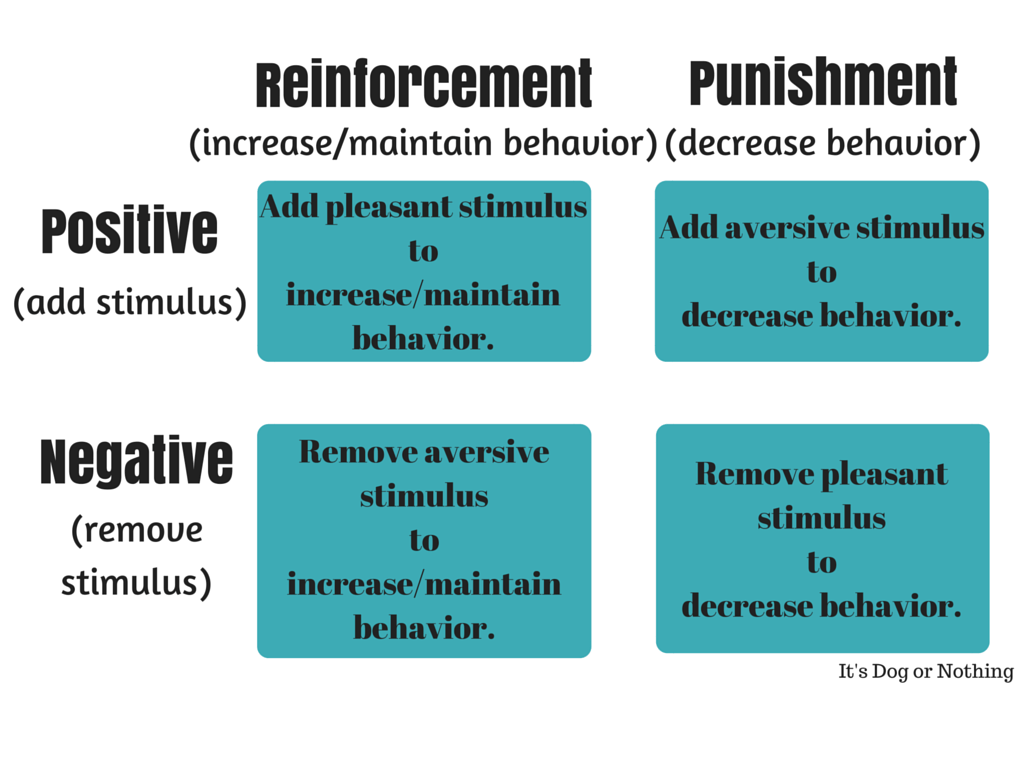
Prong collars are a form of positive punishment. Don’t let the word “positive” confuse you. Positive punishment means that a negative consequence occurs after an undesired behavior. You are adding (hence the positive) a consequence to prevent a future behavior. Another example of positive punishment would be receiving a speeding ticket after driving too fast on your way to work.

Prong collars can also be looked at as a form of negative reinforcement. For example, after the dog learns that pulling causes the collar to pinch, he stops pulling. The dog changes his behavior (pulling) to prevent an aversive stimulus (pinching).

So many people assume that the only way to control a giant breed dog is through force such as a choke or prong collar. There are so many detriments to using such an aversive tool. Thankfully, there are better ways to ensure your dog doesn't pull you down the street.

Consequences of Prong Collars

Studies have shown over and over that pulling and jerking of the leash (on any form of collar) is extremely harmful to the dog’s neck and throat. Many dogs experience bruising on their neck and even eye damage. I see more puncture wounds in the dog’s neck than I care to say.

Physical damage aside, there are mental/emotional consequences of utilizing prong collars. Perhaps you’re struggling with your dog pulling toward other dogs while on a walk. Leash corrections don’t do anything to address the root cause of the issue. They do, however, increase behavioral issues such as fear and anxiety.

Our first dog, Kaeto, had horrible leash reactivity. We learned that in his prior home he had received leash corrections for over-excitedly pulling toward other dogs. He began to associate strange dogs with the pain of the correction which led him to fear other dogs. Seeing a dog meant pain. Not a good thing.

My Dog Doesn’t Act Like He’s In Pain

This is one of the most common arguments for proponents of prong collars. Just because a dog doesn’t show signs of pain or discomfort, doesn’t mean they aren’t actually experiencing it. Dogs typically have a high pain tolerance and won’t show pain most of the time. This is especially true for Great Pyrenees. The Great Pyrenees not only has a high pain tolerance but doesn’t let pain impact his job. It takes a very high-level of pain for a Great Pyrenees to react.

Another argument is that prong collars don’t cause pain if they are used properly. This is completely and utterly false. If they didn’t cause pain, they wouldn’t work. Going back to positive punishment and negative reinforcement, either the dog is receiving an unpleasant stimulus or the pain is removed after doing the “right thing”. Pain is involved either way.

So many people assume that the only way to control a giant breed dog is through force such as a choke or prong collar. There are so many detriments to using such an aversive tool. Thankfully, there are better ways to ensure your dog doesn't pull you down the street.

My Dog Gets Excited When I Grab the Prong Collar

What does the prong collar mean to your dog? Does it means he gets to go for a walk or a car ride? Maybe he gets to go to the dog park. Your dog is associating these events with the prong collar. However, he’s not excited to experience pain while out on these adventures.

No, Your Giant Breed Does NOT Need a Prong Collar

When Atka was only 3 months old, we had him in a puppy kindergarten class to work on the basics and on his socialization. The class had an adorable Saint Bernard puppy who was about one month older than Atka. They were the two biggest pups in the class, so they always had a great time wrestling together.

The owner was having a really difficult time working on loose leash walking with her Saint puppy. He would drag her into the building happily pursuing the closest person for pets, thanking them with copious amounts of slobber. After a few weeks, the trainer pulled out a bucket of choke and prong collars and selected one for the puppy. The owner seemed hesitant, but ultimately she allowed the prong collar. He wore it every week after that.

When Atka graduated puppy kindergarten, we decided to sign him up for basic obedience at the same location. Nick and I weren’t completely fond of the trainers, but they had been letting us do our own thing (I was the only one using a clicker). Our options where we live are extremely limited, so we went with what we had.

When signing Atka up, the trainer asked if we had a prong collar and a leather leash. We didn’t, so she started to head to the bucket of pain to grab one for Atka. Mama bear in me picked up Atka and told her absolutely not – she was not putting that on my puppy. We were not allowed to sign up for the next level obedience class.

There seems to be this idea that the only way to control giant breeds is through force. According to so many, giant breeds are strong, tough dogs that need to be put in their place so they don’t take over. Maybe it’s just me, but I don’t want to train a dog that could easily take me down through force and intimidation. I would much prefer to have a dog that trusts me unconditionally.

So many people assume that the only way to control a giant breed dog is through force such as a choke or prong collar. There are so many detriments to using such an aversive tool. Thankfully, there are better ways to ensure your dog doesn't pull you down the street.

There Are Other Options

A few weeks ago, I ran into a couple with an adorable, 7-month old Great Pyrenees. He was stunning, but obviously still in his bouncy puppy phase (remember, giant breeds don’t mature until at least 3 years of age). I had to hide the horror on my face when I noticed the poor guy was wearing a massive prong collar.

Since I absolutely have to talk to anyone with a Great Pyrenees (we all know I’m obsessed), I approached them and we started chatting about their pup. They were in the collar aisle, so I asked if they had ever sought alternatives to the prong collar they were using. They said no because they were having great success with it. Their puppy was much more behaved in public. After discussing the dangers of prong collars and explaining their options, I was thrilled to see them leave with a Gentle Leader in hand.

No Pull Harness

No pull harnesses generally clip in front of the dog’s chest rather than on the back. When the dog pulls, the harness gently steers your dog to the side which allows for more attention to be directed toward you. There are many brands of no pull harnesses available, but we’ve had great success with this Easy Walk Harness with Mauja.

Gentle Leader

The Gentle Leader is my preferred tool for training loose leash walking. I’ve used it on Great Pyrenees, Great Danes, Mastiffs, Newfoundlands, and several other giant breeds.

The Gentle Leader works much like a horse halter. When your dog pulls, the leader gently directs his head to the side. This allows you to steer your dog in the desired direction. While out on walks, Atka gets very excited when he sees other dogs. No treat is going to lure his snout around to look at me when he’s highly stimulated. The Gentle Leader allows me to get his focus and then reward him for walking calmly.

The absolute most important thing to remember about the Gentle Leader, or any other head halter, is to not just shove it on your dog and go. Unless your dog is muzzle trained, he is not used to having something around his snout (just like when you first put a collar on a puppy – they’re typically not happy!). The Gentle Leader comes with instructions to desensitize your dog to the sensation so he accepts it just like he would a regular collar. Do not skip this step. Proper training and desensitization are vital to your success.

Training: The Key To Success

Using the above-mentioned tools are great while training your dog to walk politely on a leash. However, it’s important not to allow them to become a crutch. You really have to understand why your dog is pulling so you can successfully train loose leash walking.

There are many tactics and techniques for training loose leash walking. Rather than describe them all, here’s a list of helpful articles:

  • Using a Gentle Leader for Loose Leash Walking – It’s Dog or Nothing
  • How To Train Loose Leash Walking – It’s Dog or Nothing
  • Loose Leash Walking – Victoria Stilwell
  • Is Your Dog Always Pulling on the Leash? – Chasing Dog Tales
  • Leash Walking Techniques with Michelle Huntting – The Chesnut Mutts

For More Content

We’re teaming up with Fidose of Reality and Budget Earth to take a stand against the use of prong collars. Head over to their sites to see what they have to say!

So many people assume that the only way to control a giant breed dog is through force such as a choke or prong collar. There are so many detriments to using such an aversive tool. Thankfully, there are better ways to ensure your dog doesn't pull you down the street.

Filed Under: Healthy, Happy Dog, What's New Tagged With: giant breed, positive reinforcement, training

Our Adventure Into Home-Cooked Meals

February 15, 2016 8 Comments

For the past few months, we’ve been having two issues: upset tummy and itchy skin. Mauja has had really inconsistent stools – some loose and some firm. We haven’t been able to find an exact correlation to her diet, but my first instinct tells me that’s the issue. Atka’s tummy has been fine, but boy has he been itchy.

Atka has had itchy skin issues since he was about 10 months old. The first issue occurred around his eye. The area around his right eye became inflamed and the fur actually began to fall out. Thankfully, it never seemed to bother him. After Benadryl, several rounds of antibiotics, and a few types of ointments, it eventually went away. Unfortunately, after a few months it returned.

The second time we didn’t pursue any medication because we couldn’t say that one approach was actually effective. He wasn’t itching or rubbing his eye, so after a discussion with the vet, we decided to simply monitor it for a few weeks. Eventually, it went away again. This seems to happen every few months.

Currently, he’s not showing any symptoms with his eye, but his skin is quite itchy. We constantly see him scratching the back of his front legs and chewing on his back legs. Benadryl seems to help the symptoms, but it doesn’t get to the root cause of the issue.

We’ve been experimenting with different proteins and a variety of high-quality foods, but we haven’t found one that improves either of their issues. After awhile, I began to seriously contemplate feeding them home-cooked meals.

That thought terrified me.

What should they be eating? How much protein? How many fruits and vegetables? How would they get all of their essential vitamins and minerals? How do I determine their macro-nutrient needs?

So many questions and so few answers.

After dancing around the idea for a few weeks, I remembered a product we were able to try at BlogPaws last year. The fluffies had received a sample of Dr. Harvey’s Veg-To-Bowl and absolutely loved it.

These Great Pyrenees are tackling allergies and tummy issues with Dr. Harvey's Veg-To-Bowl. Check back for weekly updates on their progress!

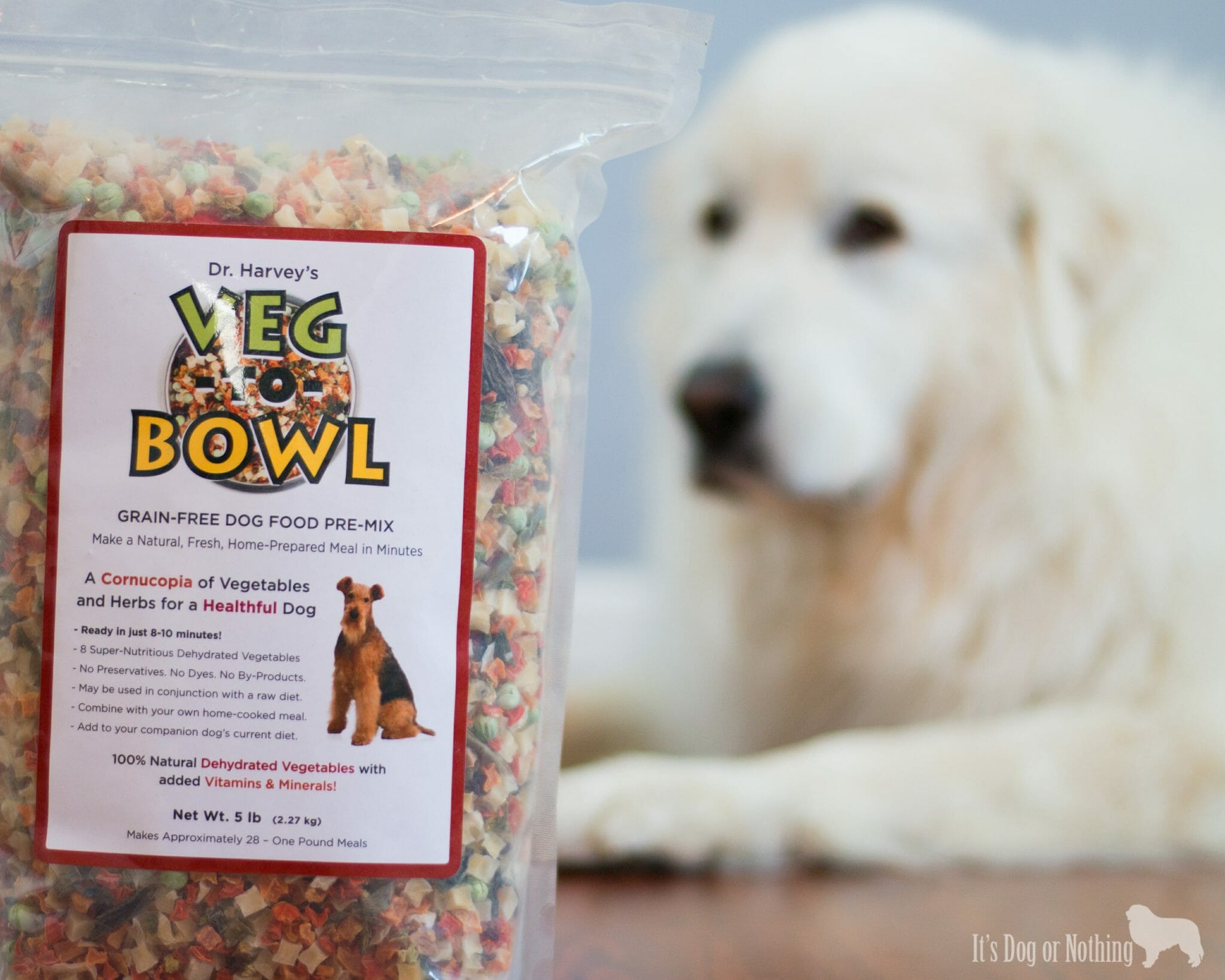
Veg-To-Bowl is a grain-free premix of nine different vegetables and herbs. You simply add your choice of protein and oil to create a complete, well-rounded meal. It makes feeding your dog homed-cooked meals extremely simple. At least, that’s the way it sounds.

I was still really nervous about making the switch to home-cooked meals, but thankfully, it was very easy to get my questions answered. After a phone call with Dr. Harvey himself, I felt much more at ease with my ability to adequately feed Mauja and Atka. I was really impressed that Dr. Harvey was so willing to take time out of his day to answer my long list of questions.

Last week, we slowly began to transition Mauja and Atka to the Veg-To-Bowl food so today begins the first day of their journey. I’m really hoping that switching them to a fresh-food diet will solve the issues we’ve been having. After reading so many of the testimonials, I’m pretty confident we will see success.

Each week, I’m going to write an update on their progress. Hopefully, these posts will assist any of you that have been considering making your dog his own meals. We also have a few other products from Dr. Harvey’s that we’ll be trying and telling you all about soon.

These Great Pyrenees are tackling allergies and tummy issues with Dr. Harvey's Veg-To-Bowl. Check back for weekly updates on their progress!

Stay tuned for more of Mauja and Atka’s journey to home-cooked meals!

Disclaimer: Dr. Harvey’s provided Veg-To-Bowl in order for It’s Dog or Nothing to try home-cooked meals. Don’t worry – an advertiser will never influence the content of this blog.

Filed Under: Healthy, Happy Dog, What's New Tagged With: dog food, dr. harvey's, great pyrenees, healthy

Atka’s Kind of Weird

February 9, 2016 5 Comments

Great Pyrenees

Oh, Atka.

I love you, I truly do, but there are some weird things about you. I write this in the most loving way possible, but I think you deserve to know why I think you’re kind of weird.

You don’t like peanut butter. How is that even possible? I definitely thought every person/animal/thing with a brain liked peanut butter. It is one of the greatest creations in the history of ever. You refuse to eat it.

You don’t like bananas. I guess that makes sense since you don’t like the perfect complement to bananas – peanut butter. You look at me like I’m torturing you when I offer you a banana. Really I’m just trying to get you some potassium. I think they’re delicious. [you can watch the video where I’m the worst mom ever and try to give him a banana here]

You don’t like popcorn. HOW IS THIS POSSIBLE. Popcorn is like seeing a unicorn travel over a rainbow – magical. Popcorn is magical. Yet you find it repulsive. How is that possible?

You don’t like carrots. Come on, Atka. Yes, carrots are healthy, but they’re great to chew on! I see so many dogs happily indulge in a good carrot, but you would rather shred it and throw it across the living room floor. For me to vacuum up.

You have to greet me in the same spot every day. When I come home from work, you run to the door but then immediately run to the living room. I can’t pet you when I’m walking in the door. I have to go into the living room and sit on the ottoman to pet you. You fuss if I take too long to get to the ottoman.

Don’t worry, Atka. I still love you with all my heart. Soon, I’ll tell you all the reasons why I love you <3


Filed Under: Fluffy Life, What's New Tagged With: great pyrenees

My Training Confession

February 5, 2016 8 Comments

TrainingConfession

My training confession –  I ignore a lot of professional trainers.

Let me elaborate. In no way am I saying that I know more about training than most trainers. However, I know more about Great Pyrenees than most trainers.

Regardless of what any trainer says, there is such a thing as an independent dog. An independent dog is not a “dominant dog” and needs to be embraced, not changed. The Great Pyrenees and other livestock guardian breeds are independent dogs – I really don’t know how anyone can argue that. A livestock guardian dog can spend days, even weeks, alone and do their job exceptionally well. They don’t need direction, but more importantly, they don’t want direction.

Atka and I have attended a few training events over the last year. All of these events were very basic for Atka, but it got him working in a new environment with different stimulation – something his adolescent brain desperately needs!

At one point, the trainer had all the dogs walking in a large circle to practice loose leash walking. She called out for us to stop and I asked Atka for a sit. He sat, but after a few seconds, his butt slowly slid back until he was in a down.

Lazy butt.

The trainer noticed this and made a snarky remark about Atka being dominant and I needed to put him back in his place. She suggested doing this by yanking the leash upward to force him into a sit.

First of all, I don’t believe in forcing my dog into anything. Secondly, you really expect me to pull a 130 lb dog up when he absolutely does not want to be up? Good luck with that one. I’ll pass.

Similar incidents have happened at several other events and they always frustrate me. Atka is never going to stay in a sit. He hates being in a sit. I think it’s partly because he’s lazy, partly because it’s hard to keep his legs from slipping, partly because he simply doesn’t care, and partly because he likes the cool floor on his belly.

To be completely honest, I don’t care how he relaxes. I only care that he actually relaxes. Getting a Great Pyrenees to enjoy training is a task itself. I want him to have a good experience and if that means being in a down, I’m fine with that.

Thankfully, Atka and I have been working with a trainer recently who gets pyrs and more importantly, gets Atka. He’s not a puppet. I’m not going to make him do as I please all the time. He’s an independent boy with his own mind and he deserves to express that. As long as he’s behaving, he can relax however he wants.

So, tell me. What’s your training confession?

Positive Pet Training Blog Hop

This post is part of the Positive Pet Training Blog Hop, hosted by Cascadian Nomads,Tenacious Little Terrier and Rubicon Days. This month’s theme is Training Confessions and the next hop begins on March 7th. The hop happens on the first Monday of every month, and is open for a full week – please join us in spreading the word about the rewards of positive training!

Filed Under: Pyr Paw Around, What's New Tagged With: blog hop, dog, great pyrenees, training confession

How To Prevent Great Pyrenees Roaming

February 4, 2016 59 Comments

Great Pyrenees roaming is a problem most pyrents can understand. Here are our top tricks to prevent your dog from going on a solo adventure.


A few weeks ago, we discussed Great Pyrenees barking. Today, we’ll be talking about Great Pyrenees roaming. I could give you the simple answer—keep him on leash or in a fenced area— but I’m sure you want more than that.

A common saying in the Great Pyrenees community is, “an off-leash pyr is a disapyr”. There’s a reason it has stuck all these years.

Before bringing Mauja home, I read a lot on Great Pyrenees and their tendency to roam. I decided to work on Mauja’s off-leash skills anyway (foolish).

All was going smoothly until she hit adolescence and her pyr instincts really started to kick in.

I remember the first time she trotted off. She saw a screwdriver on the ground (no idea what that was doing in a field), picked it up, and happily pranced off in the other direction.

[Read more…] about How To Prevent Great Pyrenees Roaming

Filed Under: Pyr Paw Around, What's New Tagged With: great pyrenees, great pyrenees roaming, roaming

You Might Have a Great Pyrenees If…

February 1, 2016 200 Comments

You might have a Great Pyrenees if...

You Might Have a Great Pyrenees If…

1. You wear a suit of white fur everywhere you go. You probably find that fur in your food (it’s a condiment, right?). You find white fur in your office, your car, and even on your friends clothes. Sorry, not sorry, guys.

2. Your dog is frequently mistaken for a “white Newfoundland” or, more commonly, a polar bear. There’s also Santa Paws, Olaf, and Falkor.

3. You keep your house on the cool side, even in the winter, to ensure your fluffy butt is comfortable. Pan to me in front of the fireplace, under a heated blanket, clutching a mug of hot chocolate…

Great Pyrenees

4. You have a scar on your face from being whacked with a giant pyr paw. It was a loving paw, of course, and you’ll always have the mark to remember it.

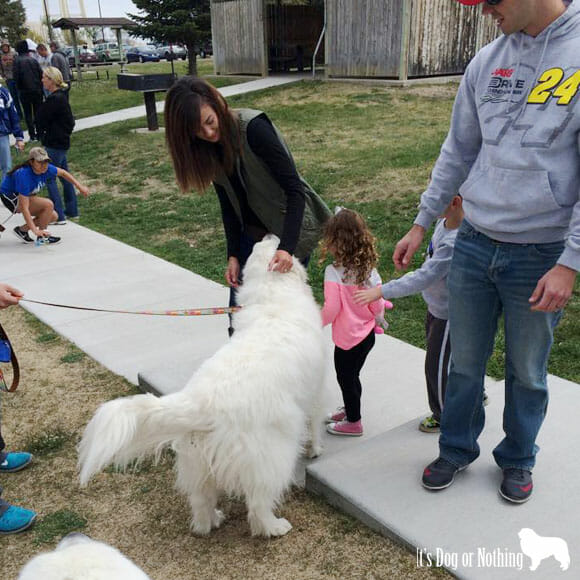
5. You feel like a celebrity when you’re out with your dog. People flock to pet your dog making it impossible to get from point A to point B in decent time. You don’t care – it brightens your day to talk about your beloved furbaby. People secretly (or not so secretly) snap photos with your dog. #celebridog

You might have a Great Pyrenees if you feel like a celebrity when you're out and about with your pyr. #celebridogs

6. You’ve snorted *insert beverage of choice* out of your nose when a stranger asked your dog to sit and instead your dog casually walked away. A remark about a lack of training was probably made, but you were laughing too hard to care.

7. You’ve become immune to the sound of barking. Your neighbor kindly (or not so kindly) informs you of the noise you no longer hear.

8. Speaking of barking – You turn up the volume on the television rather than try and quiet the bark fest. You know you’ll never win.

9. You twisted your ankle from tripping in a giant crater your dog gifted you with.

You might have a Great Pyrenees if you twisted your ankle from a pyr crater.

10. You’re constantly looking for the holy grail of vacuum cleaners that will withstand your pyr fur (and not die in a few months), but you haven’t had any luck so far. PS – Currently accepting recommendations.

11. You’ve experienced a true love and deep devotion that you never imagined existed.

So tell me – what are some other signs that you have a Great Pyrenees?

You might have a Great Pyrenees if...

Filed Under: Pyr Paw Around, What's New Tagged With: dogs, great pyrenees

Primary Sidebar

Want to find something?

Raise That Pyr Paw

Raise That Pyr Paw

Welcome to It's Dog or Nothing, the go-to resource for all things Pyrenees.

  • Email
  • Facebook
  • Instagram
  • Pinterest
  • YouTube

Subscribe

Join our email list to never miss a post and gain access to exclusive deals!

Footer

Features

  • Blog
  • Amazon Shop
  • Pyr Apparel & Gifts

Join Me On

  • Email
  • Facebook
  • Instagram
  • Pinterest

Main

  • Home
  • About
  • Contact

Copyright © 2024 · Studio Mommy Themes · Custom Scene Images

Copyright © 2024 · Adore Me on Genesis Framework · WordPress · Log in · Privacy Policy

Follow on Instagram