
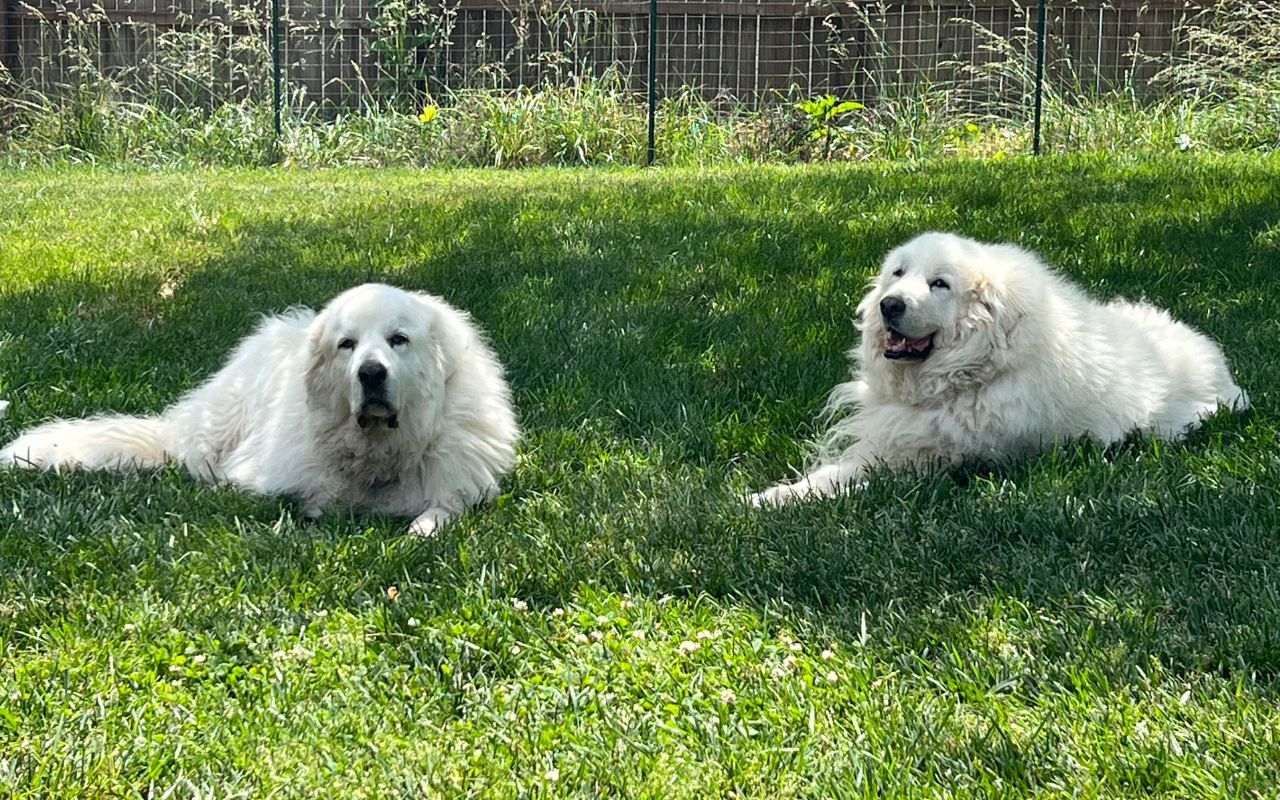
They bark, they dig, they drool, they shed nonstop. These are all things I read and heard when I was debating if Great Pyrenees were the right breed for me. I read everything I could to try and prepare myself for the breed. I thought pyrs were absolutely stunning, but I was a bit worried about some of their breed traits.
With Mauja turning 12 and Atka turning 11 this past fall, it’s hard to believe I’ve had over a decade of pyr love in my life. Here are 10 things I’ve learned after over 10 years of living with Great Pyrenees.
1. Great Pyrenees never stop barking.
Seriously. I thought I was fully prepared for how much Great Pyrenees bark when I decided to add pyrs to my world. Mauja quickly proved that you can read all the books and articles and participate in all the pyr groups, and still, you’ll never truly be prepared until you experience it yourself (don’t get me started on how little I now think she barks compared to Kiska and Tikaani).
Mauja and Atka settled into their “adult barking” around 2-4 years of age—and it’s remained the same age ever since. I truly believed that by age 8 or 9, Mauja and Atka would be calm and quiet. No more endless Great Pyrenees barking.
Boy, was I wrong. There’s always a reason to bark!
Pyrs take their job very seriously—no matter what age. At 12 and 11 years old, Mauja and Atka are still guarding like they were in their younger years. And I don’t see that changing any time soon.
Related: Will My Great Pyrenees Bark All the Time?
2. You can shift their nocturnal nature.
I researched before deciding to bring Mauja home—and researched and researched. I read repeatedly that Great Pyrenees are nocturnal and that I could do nothing to change that. I loved everything about pyrs, but this trait worried me. I could handle the night barking, but I was sure my neighbors wouldn’t be too keen on the 4 am wake-ups.
From the day Mauja came home, we worked on a nighttime routine. Since she wouldn’t be guarding livestock, she didn’t need to be up and on alert through the night—we had a security system for that!
The floofs still bark overnight at times, but they’re not up patrolling the entire night. This system has worked for every dog that has come into our home, even the former LGDs (livestock guardian dogs) used to being up all night.
3. Hip issues are common, but there are ways to help.
Their large size puts Great Pyrenees at high risk of hip dysplasia and other hip issues. A high-quality joint supplement can make a huge difference in maintaining mobility as they age. We’ve tried several over the years, and our favorite is Dasuquin® Advanced With ESM Soft Chews. It’s a veterinary-exclusive formula, so if you’re looking for an easier-to-access supplement, we also like this one.
Aside from a good quality supplement, regular activity is essential for maintaining hip health and strength. Walking is always great, and swimming is a fantastic choice if you have a water-loving pyr. Water treadmill therapy is an invaluable rehab tool as well.

4. A fenced yard is immensely helpful but not necessary.
Depending on the age of your pyr and the resources near you, a fenced yard isn’t always necessary. I prefer having a fenced yard to give the floofs a place to hang out and enjoy the weather, but we have lived in an apartment with Great Pyrenees before. We actually lived in an 800 sq ft apartment with four pyrs for a few months!
I will always advocate for a yard with a 6 ft fence, but shelters are overflowing—we need more homes for these pyrs. If you don’t have a fenced yard for your Great Pyrenees, you must commit to long, daily walks to ensure your pup gets the proper physical exercise and mental stimulation.
Related: How To Prevent Great Pyrenees Roaming
5. Age is just a number.
I often imagined what life would be like when Mauja and Atka hit their senior years. We would be sitting on our front porch watching people stroll by, or they’d be hanging out while I worked on the front flower beds. I thought they would have slowed down significantly at this point and wouldn’t care about the squirrel scurrying past.
I have been so wrong. Given the opportunity, Mauja and Atka will still chase that squirrel. They’ll run to the fence to bark at passersby. We still hang out in the front yard together, but a leash—and a close eye—will remain an absolute must.

6. Not all Great Pyrenees require endless grooming.
Great Pyrenees require a lot of grooming, but their needs vary widely. Mauja and Tikaani have thick, wooly, difficult coats. Each grooming session lasts hours, and they need very frequent brushing to remain mat-free. Atka and Kiska’s coats are the opposite. They have thinner, shorter fur that remains tangle-free with less frequent grooming.
If you’re adding a pyr to your family, especially a puppy, prepare for the worst, but hope for the best!
7. They are incredibly smart.
It’s important not to confuse intelligence and obedience—Great Pyrenees are very smart dogs. They were bred to work independently from humans and often choose not to prioritize obedience, but they are extremely quick learners.
I have never had any trouble teaching a pyr basic commands or tricks. Convincing a pyr to do the command/trick when there’s essential guarding to be done is a different story!
Related: 10 Tips for Training Great Pyrenees
8. Some aren’t cut out to be livestock guardians.
Great Pyrenees were bred to be livestock guardians. Guarding is a natural instinct for them—it’s in their DNA. But some pyrs truly aren’t cut out to be livestock guardians. Some are perfectly content and excel at guarding less important things, like your couch.
Proper breeding and adequate training are necessary for a successful livestock guardian dog. If you’re interested in an LGD, finding a reputable breeder to help you choose the right dog and assist with any training needs is essential.

9. They’re all different.
While pyrs have typical traits, their personalities vary widely. Mauja, Atka, Kiska, and Tikaani all love to bark and dig, typical Great Pyrenees traits
10. Great Pyrenees are fiercely loyal.
Take care of them, and they’ll take care of you—til the end of their days.
Leave a Reply